


Medical Helicopter Crash: A Stark Reminder on the Dangers of Emergency Services 🚁⚠️
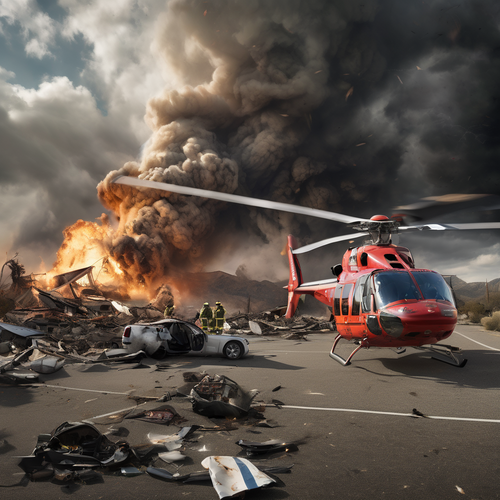
In a sobering twist of fate, a Scripps Health emergency medical helicopter met with disaster on a California freeway, leading to the injury of three crew members. What should have been an orchestrated ballet of urgent medical response transformed, in an instant, into a scene that could only be described as the tragic irony of life: here to save, only to become casualties themselves. How often do we consider the risks faced by those who come rushing to our aid? 🤔
The medevac chopper, a sleek embodiment of modern medical efficiency, faltered over the busy asphalt arteries of California’s roadway, a stark contrast of its purpose and its predicament. It’s a strange but acute reminder that even the most vital of safety frameworks can encounter failure. As helicopters are often considered the lifeline in emergencies, this incident juxtaposes the precision of their medical missions with the capriciousness of aviation—reminding us that the skies can be both helpers and hunters. 🌥️💔
The Crash Details: What We Know So Far
Initial reports indicate that the helicopter, responding to a critical incident necessitating rapid medical intervention, experienced mechanical failure shortly after takeoff. Eyewitness accounts describe the moment as surreal, with the whirling blades suddenly descending into chaos against the backdrop of honking horns and rushing traffic. Perhaps in that moment, the whir of the rotors transformed from a reassuring sound into a harbinger of calamity.🚦
This incident occurred at an hour when the freeway was bustling with commuters, and as if scripted by the universe, the perfect storm of urgency and fate collided. According to the California Highway Patrol, the chopper made a hard landing, and the crew members sustained non-life-threatening injuries. However, the ramifications reverberate beyond the immediate physical injuries—they echo within the realms of public trust in medical transport systems. How many times do we take for granted the fine line between safety and disaster in our emergency services? 🏥
The Broader Implications
This helicopter crash surfaces larger discussions about emergency medical services. Aviation recalls safety protocols akin to those of the finest symphony orchestras—one misstep can result in discord. Each year, thousands of medical transports occur without incident. Yet, as this recent tragedy highlights, precariousness accompanies these flights. The underlying irony is that in an age where many dismiss the importance of traditional emergency services, it may be the nuanced choreography of human hubris that ultimately leads to disaster.
- Risk Management: Emergency services are trained to handle extreme situations, but do they adequately prepare for aerial failures?📊
- Patient Trust: How confident should citizens feel when they see emergency vehicles in action—especially aircraft? 🚑
- Public Policy: How will this incident spur discussions about regulations and safety requirements for emergency aviations? 📜
Voices of Experience
In the wake of the crash, medical professionals have begun reflecting on what this incident might mean for future protocols. Dr. Emily Torres, an experienced surgeon with years of flight operations under her belt, commented on the paradox of risk: “In every flight, we balance on the blade’s edge between life and death. This tragedy reminds us of the fragility of our lifelines and the weight they carry” 🌈.
In 2022 alone, nearly 30 million patients in the U.S. were transported by air medical services, highlighting the reliance on these brave men and women. The striking antithesis of their noble intentions—a sudden reminder that even those who promise hope can be met with fate’s darkest hand—demands a new perspective on how we treat and manage emergency services.
A Call to Action
While the root causes of this incident are still being investigated, the conversation surrounding it must evolve. Reassessments of both vehicle maintenance standards and the adequacy of pilot training must be prioritized. As citizens, we deserve to know that when we call for help, the hope of rescue is matched by the assurance of safety. Are we ready to embrace this necessary change, or shall we, like the echo of a fallen rotor blade, allow this lesson to fade away? 🔄
The recent crash is not merely a story of mishap but a narrative reminding us of our interconnectedness—those in the air and we on the ground—and the thin line that separates safety from disaster. Emergency medical services will continue critical work, yet with renewed diligence, vigilance, and commitment to the highest standards of safety. Only then can we ensure that our angels of mercy remain unscathed, navigating the treacherous skies between life and death.✈️✨