



Iranian Forces Drag Tanker towards Home: A Stark Maritime Reality ⛴️⚓
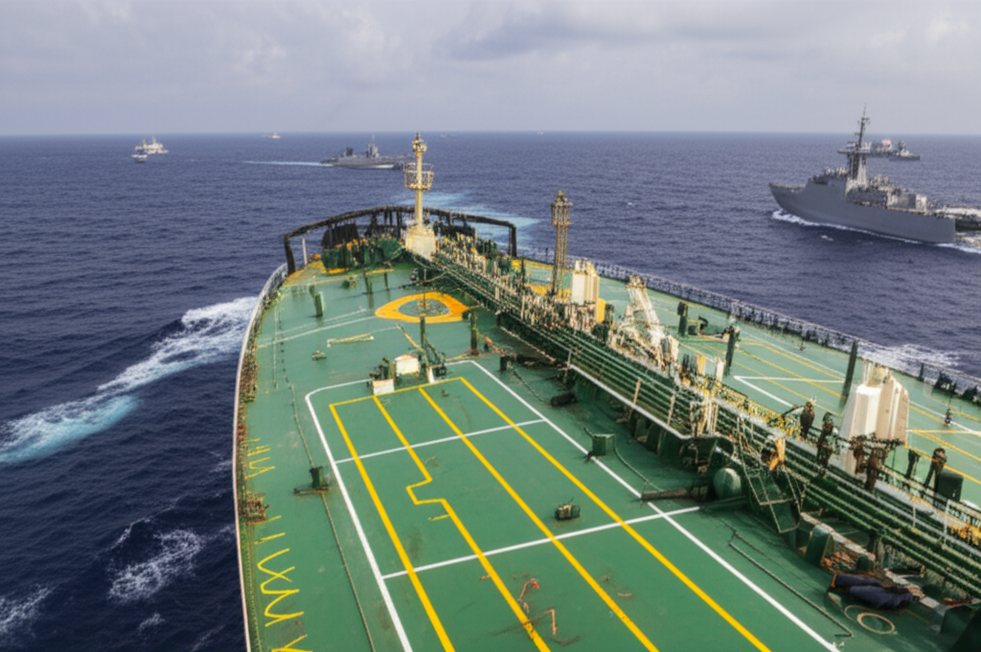
In an act that echoes the intricate dance of international maritime relations, Iranian forces have seized control of a foreign tanker, guiding it back to the shores of Iran. This incident, while dramatic, sits like a stone in the pool of geopolitical tensions, creating ripples that are sure to disturb various stakeholders. But what does this maneuver signify in the larger scheme of global maritime security? 🌍
As the sun sets on yet another day of high-seas drama, one cannot help but wonder: are we witnessing a return to age-old practices of piracy masked as state operations? Or is this merely the latest skirmish in an ongoing geopolitical chess game? Such events rarely happen in isolation; instead, they leave us with a myriad of questions: how do they affect shipping routes, and what implications do they hold for international law? ❓
Maritime Security: The Storm Before the Calm
The intercepting of tankers in strategic waterways is as old as maritime trade itself, yet today it conjures images of a precarious balance between security and aggression. For Iran, the capture may seem like a defiant roar against a backdrop of economic sanctions and isolation; for the rest of the world, it presents a jarring contrast between the ostensible freedom of the high seas and the tightening noose of authoritarian control.
Picture, if you will, a bustling marketplace filled with traders shouting out prices and exchanging goods. Now imagine a gang striding in, declaring that they will take over a stall—does that sound familiar? This stark contradiction between the ideals of open shipping lanes and the realities of regional hegemony forms a compelling narrative of modern maritime operations. 🔗
The Tangled Web of International Law
The complexities of international maritime law come into sharp focus in situations like this. The United Nations Convention on the Law of the Sea (UNCLOS) aims to provide a framework for the peaceful use of the oceans and the stewardship of marine resources. Yet, in the murky waters of geopolitical tensions, such frameworks often seem like fragile glass structures, easily shattered by the weight of political ambition.
- Geopolitical Intent: Iran’s actions reflect its long-standing strategy of asserting influence over critical trade routes, reminiscent of a lion staking its claim over a watering hole.
- Legal Conundrums: The interception raises questions surrounding the legality of state-operated seizures on international waters, which, in many respects, seems as clear as mud.
- Indicator of Trends: This incident could signify a chilling trend where nations reassert control over maritime territories, as if pulling up the drawbridge instead of inviting cooperation.
The irony is striking: while the seas are often touted as the last bastion of free trade and communication, incidents like these remind us that some vessels are more equal than others. ⚖️
The Strategic Implications for Global Shipping
The route taken by commercial vessels is not merely a matter of pathfinding; it serves as an artery for global trade—compromising it threatens vital supply chains. Imagine a world where vital shipping lanes are akin to a fragile spider’s web, easily tangled by geopolitical interference. This is not just theoretical; analysts warn that such actions could lead to an uptick in shipping insurance costs and a reevaluation of route safety. 🕸️
The Ripple Effect
By reshaping trade routes, Iran’s actions not only impact their immediate surroundings but also create a domino effect that reverberates across continents. Nations that rely on the steady flow of oil and commodities may find themselves reassessing partnerships, leading to an upheaval in established supply chains as shaken players scramble for alternative arrangements. 🌊
Waves of Change: The Future of Maritime Relations
As we sail into this labyrinth of shifting allegiances and nationalistic fervor, one thing becomes clear: the global maritime landscape is changing faster than sails can catch the wind. With each action echoing louder across the waters, the message is ambiguous. Will nations collaborate to secure free passage, or will pirate traditions of yore resurface under a modern guise? The ocean may remain vast, yet it feels increasingly confined by the burdens of ambition and uncertainty.
These ongoing maritime dramas seem both farcical and tragically ironic—the very embodiment of nations that, while clinging to their notions of sovereignty, disrupt the ideals of shared prosperity that global trade endeavors to uphold. As tensions heighten and the stakes grow, it begs the question: can we find common ground, or are we doomed to relive the follies of our past? 🤔