

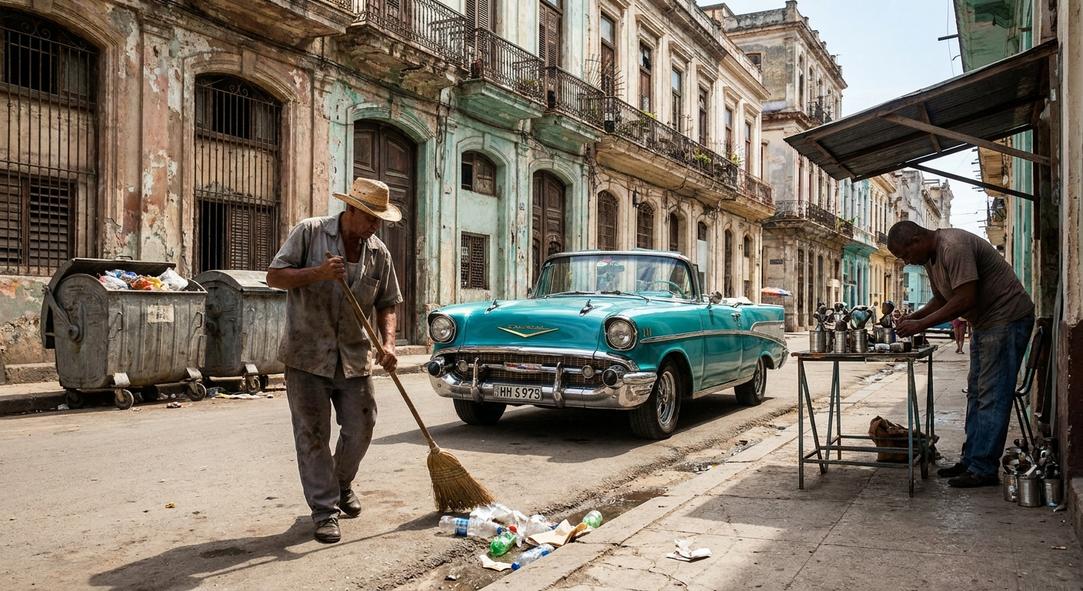
Even Havana’s Street Sweepers Can’t Escape the Trash 🗑️🌴
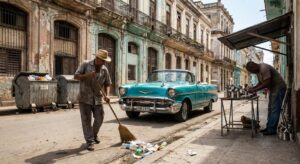
In the heart of Havana, where vintage cars glint like polished cherries in the relentless sun, another spectacle thrives: heaps of litter commanding the city’s pulse. Here, amid colonial grandeur and vibrant rhythms, refuse fills the gaps as if ashamedly seeking relevance 🤔.
This bustling city, known for its intoxicating charm and communal warmth, is trapped in a paradox. A place where choreographed smiles accompany frequent shortages, and where waste management struggles to keep pace with the melodies of resilience. The icons of Havana—cigars, rum, and salsa—are joined by less glamorous companions: overflowing bins and forgotten corners 🕳️.
Living at the Edge of Contradiction
Street sweepers, often invisible amid the chaos, navigate this duality daily. Their work is an endless cadence against the backdrop of a city that dances in denial. Despite their efforts, piles of trash reappear as if mocking their toil, much like weeds resiliently sprouting after a rainstorm. Simple tools—brooms and shovels—become extensions of their resolve, scraping against the tides of urban neglect.
Unsurprisingly, Havana’s waste dilemma isn’t solely cosmetic. It’s an intricate dance of logistics, economics, and legacy. What’s disheartening isn’t merely the sight of trash, but the rural silence echoing from administrative corridors 🏢. Officials, with their multifaceted memoirs of embargoes, blame an underfunded municipal budget, while locals adapt with resourceful resolve—crafting solutions where governance leaves voids.
The Economy of Waste
In a city where resources are as precious as the morning’s first light, trash is ironically constant. It serves as a crude diary of consumption and a reminder of the broader challenges. Curiously, Havana’s struggle with waste is not a recent endeavor. Its roots dig deep, intertwining with the environmental and fiscal pressures unique to the island.
Here, in this paradoxical ecosystem, some view the rising mounds as opportunities. The informal sector thrives, converting waste into artistry, echoing the thrift and creativity inherent in Cuban culture 🖌️. Consider the artisans who, like alchemists, transform discarded metal into instruments of beauty and utility. Their creations stand as testament to an adaptive spirit that refuses to succumb to weighty odds.
A Dance of Shadows and Light
Yet, the romantic notion of turning trash into treasure is bittersweet, akin to adorning a weary patriarch with borrowed finery. The reality is more somber—each bag of refuse acts as a lingering metaphor for unaddressed issues that stretch far beyond the city limits.
The irony is palpable. Despite persistent efforts, Havana’s street sweepers are trapped in a Sisyphean task, their enduring efforts seemingly erased by dusk, only to begin anew with dawn’s first blush. Are they cleaning a city or simply moving its dirt? Such questions hang in the air, as heavy and constant as the haze from a distant cigar.
So, what then of the trash? Does it whisper the unintended testament of a nation’s myriad struggles, or does it clamor for renewal and reform? These queries tease at the edges of Havana’s complicated identity, quietly demanding solutions that align with its celebrated endurance 🔄.